
Why More Than One Company Can Be Held Responsible for a Chicago Jobsite Injury
Key Takeaways: OSHA’s multi-employer worksite citation policy lets inspectors cite several companies for the same hazard, sorting them into four functional roles: creating, exposing, correcting, and controlling employers. These categories generally depend on what each company actually did and controlled, not contract titles, and a company may occupy more than one role at once. For injured Illinois workers, this matters because the Workers’ Compensation Act generally makes compensation the exclusive remedy against a direct employer, subject to limited exceptions, making third-party negligence claims a primary path to full damages. A citation against a controlling or creating employer that isn’t your employer may be persuasive evidence of notice and standard of care, though it doesn’t automatically prove liability and its admissibility depends on the court. Illinois has its own occupational safety statute with parallel concepts, but it applies to public employers and doesn’t displace federal OSHA authority over private construction sites. Early documentation, written injury notice, and prompt legal review can help identify responsible parties before evidence disappears.
When you’re hurt on a construction site, the company that signs your paycheck is rarely the only party whose decisions may have put you in danger. Under the OSHA multi employer worksite citation policy, inspectors may cite several companies for a single hazardous condition, depending on what each one did, controlled, or ignored. For an injured Illinois worker, those citation categories can become useful evidence in a third-party negligence claim that may reach beyond a workers’ compensation check.
If you or a loved one was injured on a jobsite anywhere in the Chicago area, the attorneys at Trapp & Geller can review the safety record behind your accident and identify every potentially responsible party. Call (312) 368-1444 or contact us now to discuss your options.
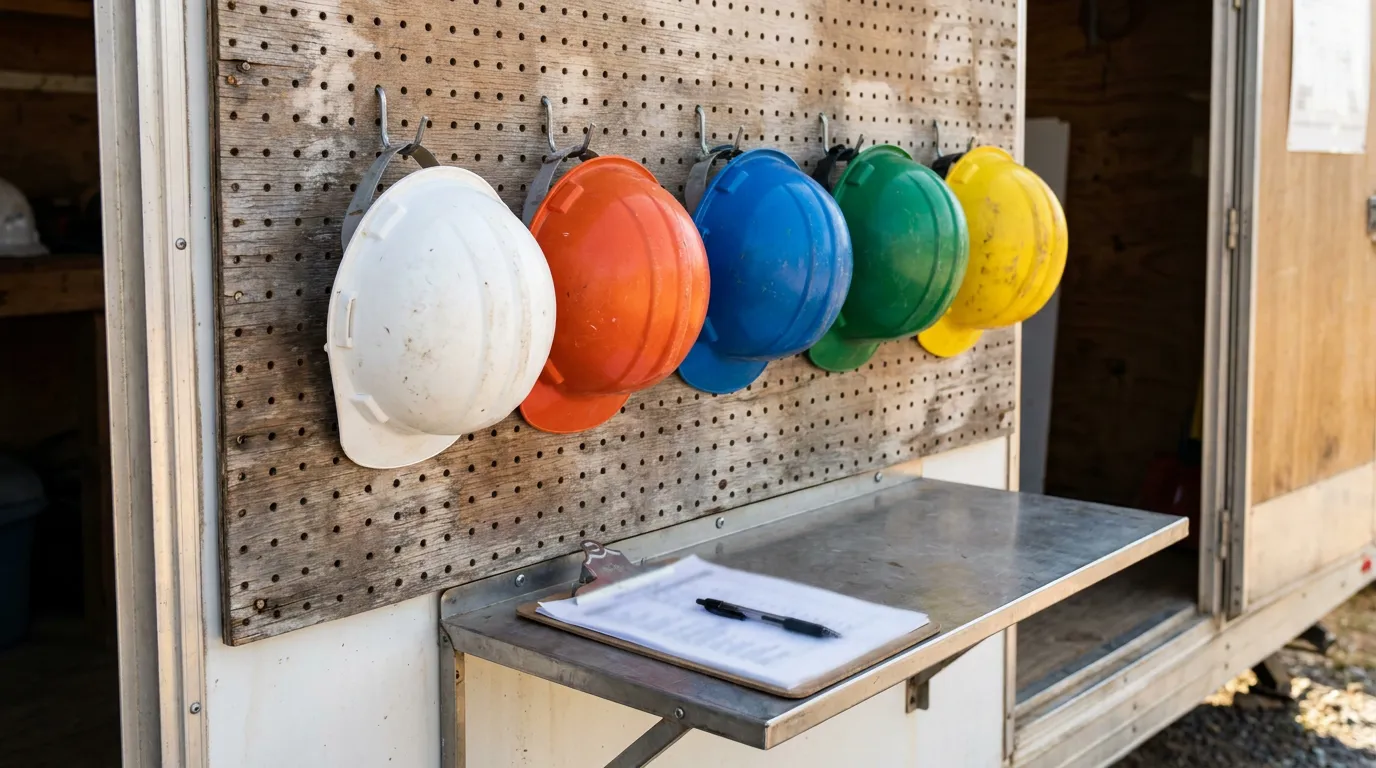
The Four OSHA Employer Roles at a Single Worksite
OSHA’s enforcement directive sorts jobsite companies into four functional categories rather than relying on job titles or contract labels. CPL 02-00-124 states that more than one employer may be citable for a hazardous condition violating an OSHA standard, explaining why a general contractor, a scaffolding subcontractor, and a specialty trade firm may all receive paperwork after the same fall. The directive is an internal enforcement policy rather than a regulation, and some federal courts have questioned or limited its application, so its weight can vary by jurisdiction.
The four categories are generally described as follows:
- Creating employer: one who "caused a hazardous condition that violates an OSHA standard."
- Exposing employer: the employer whose own employees are exposed to the hazard, even if that company didn’t create it.
- Correcting employer: an employer "engaged to correct a hazardous condition," such as a subcontractor hired to install or maintain fall protection.
- Controlling employer: one with "general supervisory authority over the worksite, including the power to correct safety and health violations itself or require others to correct them."
These roles often overlap, a single company may be both creating and exposing, or controlling and correcting, and compliance officers apply distinct tests to decide whether each may be cited. Correcting and controlling employers are generally measured against a reasonable care standard rather than a guarantee of a hazard-free site.
How Inspectors Evaluate Control and Care
Citation liability generally turns on function, not who holds the prime contract. OSHA’s interpretation letters examine the degree of care and control each company actually exercised at the site. A general contractor that walked the site weekly and had authority to shut down unsafe work occupies a very different position than one with no meaningful presence. These letters reflect the agency’s views and are not binding law.
Because the analysis is fact-driven, outcomes vary. Two companies with nearly identical contracts may end up in different positions depending on daily conduct, inspection logs, and who had practical power to fix the problem. Courts and agencies may reach different conclusions on the same facts, so no worker should assume the citation record tells the whole story.
Why the OSHA Multi Employer Worksite Citation Policy Matters to Injured Workers
In Illinois, the Workers’ Compensation Act generally makes benefits the exclusive remedy against a direct employer, which can make third-party claims a primary route to full damages. Narrow exceptions exist, including injuries that weren’t accidental or didn’t arise out of and in the course of employment. A citation issued to a controlling or creating employer that is not your direct employer may support a negligence theory against that entity, provided it owed and breached a duty to you under Illinois law. Safety violations don’t automatically establish civil liability, and Illinois courts have generally declined to treat OSHA violations as negligence per se, though such evidence may still be relevant to standard of care and notice.
For example, an electrician injured by an unguarded floor opening created by a concrete subcontractor may have a compensation claim through their own employer and, depending on circumstances, a separate negligence action against the concrete company, the general contractor, or both. Because Illinois repealed its Structural Work Act, claims against contractors are generally analyzed under ordinary negligence principles, including retained-control rules courts apply to those who hire independent contractors. Understanding construction site safety requirements early may help preserve those parallel avenues.
💡 Pro Tip: Photograph the hazard, surrounding signage, and any subcontractor logos on equipment before the site is cleaned up. Conditions can change within hours, and contemporaneous images often become the clearest proof of who created the danger.
Illinois Statutory Parallels Worth Knowing
Illinois maintains its own occupational safety statute that closely tracks the federal model for public employers. Under the Illinois occupational safety statute (820 ILCS 219/1), a serious violation exists where "there is a substantial probability that death or serious physical harm could result" from a condition or work practice, unless the employer did not know and could not with reasonable diligence have known of it (820 ILCS 219/85(d)).
The state law also reinforces the correcting employer concept: a public employer that fails to correct a cited violation within the permitted abatement period may face a civil penalty of up to $1,000 per day the violation continues (820 ILCS 219/85(c)(6)). If the Director issues a citation, notice of any proposed civil penalty must be sent by certified mail within five days (820 ILCS 219/85(a)). Penalty amounts and procedures are subject to amendment, so current statutory text should be confirmed.
Where Federal and State Enforcement Diverge
These Illinois provisions generally apply to public employers and don’t replace federal OSHA jurisdiction over private construction sites. Readers shouldn’t assume a state penalty provision governs a private high-rise project. This distinction may matter when counsel evaluates which enforcement record to request.
Administrative enforcement is also separate from any civil lawsuit. An OSHA citation, an appeal of that citation, and a personal injury case each generally follow their own timelines, and the resolution of one doesn’t necessarily determine the outcome of another. Neither the federal nor the state act creates a private right of action for an injured worker.
Comparing the Four Employer Categories
| Role | Core Question | Typical Jobsite Example |
|---|---|---|
| Creating | Whose actions produced the hazard? | Crew removes a guardrail and leaves the edge open |
| Exposing | Whose workers faced the danger? | Trade employees working near that unguarded edge |
| Correcting | Who was hired to fix or maintain the safeguard? | Scaffold contractor responsible for tie-offs |
| Controlling | Who had authority to order the fix? | General contractor with site-wide supervisory power |
This grid is a starting point, not a verdict. Analysis published in the DCBA Brief legal journal reflects how Illinois practitioners apply these categories in litigation. They describe OSHA enforcement roles rather than civil causes of action, so they may inform investigation strategy without deciding fault.
Common Obstacles Injured Workers Encounter
Identifying the right defendant is often among the hardest parts of a construction case. Layered subcontracting, staffing agencies, and equipment lessors can obscure who actually controlled the work. Contracts may assign safety duties on paper to a company that exercised no real authority on the ground. Staffing arrangements can also raise borrowed-employee questions, which in some cases may extend the exclusive remedy bar to a second company.
Other frequent challenges include:
- Missing or altered inspection logs and toolbox talk records
- Witnesses employed by potential defendants and reluctant to speak
- Insurers seeking recorded statements before the worker understands the claim structure
- Assumptions that workers’ compensation is the only available remedy
💡 Pro Tip: Report the injury to your direct employer even if you plan a third-party claim. Illinois generally requires notice within 45 days of the accident, and while verbal notice is legally sufficient, written notice may help protect compensation benefits by creating a clear record, which in some cases may cover medical care while a longer negligence case proceeds.
Building the Evidence Record
Documentation gathered in the first weeks can significantly affect whether responsibility may be traced to a solvent third party. Preservation letters, requests for the OSHA inspection file, subcontract agreements, and daily logs may help establish who occupied which role. Medical records may tie the injury to the hazard and support future damages.
Firms handling these matters generally evaluate current and projected medical costs, lost earning capacity, disability, and the human cost of a permanent injury. Trapp & Geller has recovered significant results for injured Illinois clients, including a $700,000 settlement secured by attorney Jeremy Geller for leg injuries caused by a semi-truck driver and trucking company. Every case depends on its own facts, and past results do not predict future outcomes.
Frequently Asked Questions
1. Can my own employer be cited as the exposing employer?
In some cases, yes. The exposing employer is generally the company whose employees are exposed to the hazard, even if that company didn’t create it. A citation against your direct employer generally doesn’t create a right to sue that employer in tort, since Illinois workers’ compensation is usually the exclusive remedy, though the citation may still be relevant evidence against another party.
2. Does an OSHA citation prove negligence in my injury case?
Generally not by itself. Citations are administrative findings, subject to appeal, and are not treated as negligence per se in Illinois; courts may also limit or exclude them under evidentiary rules. Still, a citation may support arguments about notice, foreseeability, and the accepted standard of care.
3. What if no citation was ever issued?
A case may still proceed. OSHA doesn’t inspect every accident, and the absence of a citation doesn’t necessarily mean the site was safe. Independent investigation, witness testimony, and safety consultants may help establish a violation of accepted practice.
4. How long do I have to file a claim in Illinois?
Illinois personal injury claims are generally subject to a two-year limitations period, while workers’ compensation applications generally must be filed within three years of the injury or two years of the last compensation payment, whichever is later. Shorter deadlines may apply to claims involving public entities. Exceptions such as discovery-rule tolling exist but are interpreted narrowly, so deadlines should be confirmed with counsel.
5. Can I pursue both workers’ compensation and a lawsuit?
Under certain circumstances, yes. Compensation benefits generally flow from your employment relationship, while a negligence action targets a separate responsible party. Coordination matters because the employer or its compensation carrier generally has a statutory lien on any third-party recovery, subject to reductions for attorney fees and costs.
Protecting Your Recovery After a Multi-Employer Jobsite Accident
The four OSHA employer roles exist because construction hazards rarely have a single author. Recognizing which company may have created the danger, which controlled the site, which was hired to correct it, and which exposed workers to it can give an injured worker a structured way to look past the paycheck and toward parties whose choices may have contributed to the harm. The analysis is fact-intensive, deadlines are unforgiving, and the strength of any claim depends on the specific circumstances involved. An experienced osha multi employer worksite citation policy lawyer can evaluate the enforcement record alongside the contracts and site conditions.
Do not let an insurer define the scope of your claim. Reach out to Trapp & Geller at (312) 368-1444 or request a case review to learn what compensation may be available to you and your family.
Disclaimer: This content is for informational purposes only and is not legal advice. Every case is unique, and results may vary. Consult an attorney about your specific circumstances.