
What Your Vehicle Quietly Recorded in the Seconds Before Impact
Key Takeaways: Most modern vehicles contain an event data recorder that captures seconds of technical information, speed, braking, throttle position, seatbelt status, and delta-V, surrounding a crash. In Illinois, 625 ILCS 5/12-608.1 treats this data as the vehicle owner’s property and limits third-party retrieval to defined situations such as owner consent, a court order, servicing/diagnosing the vehicle, or research and emergency-response uses that don’t identify the owner or vehicle. This objective data matters because Illinois uses modified comparative negligence under 735 ILCS 5/2-1116, where damages may be reduced by your percentage of fault and recovery may be barred entirely when the plaintiff’s fault exceeds 50%. Commercial trucks add further evidence through engine control modules, electronic logging devices, and telematics, typically controlled by the trucking company. A major threat to this proof is delay, since vehicles get repaired or salvaged and ignition cycles can overwrite stored events. Access is a separate question from admissibility. Because the data can help or hurt either side, early legal involvement is often the practical way to preserve, retrieve, and correctly interpret it.
Most modern vehicles store a short burst of technical information when a crash occurs, and that information can shape who is blamed for a collision in Illinois. Speed, braking, throttle position, seatbelt status, and change in velocity at impact are commonly captured by an event data recorder, though specifics vary by manufacturer, model, and year. For an injured driver, passenger, cyclist, or pedestrian facing an insurer that disputes fault, this silent witness may be one of the strongest pieces of evidence available. The catch is that the data is often fragile, legally protected, and sometimes gone before anyone thinks to ask for it.
If you were hurt in a collision and believe the other driver’s version doesn’t match the physical facts, the team at Trapp & Geller can help you move quickly to preserve critical proof. Call (312) 368-1444 to discuss what happened, or reach out to our team to request a case review.
Illinois Law Recognizes and Regulates Vehicle Black Boxes
Illinois addresses this technology directly by statute. Under 625 ILCS 5/12-608.1, "Recording devices," the Illinois Vehicle Code defines and regulates recording devices installed in motor vehicles, setting the legal framework for what most people call a black box. Federal regulations at 49 C.F.R. Part 563 separately govern what EDRs must record when manufacturers install them.
This matters because it moves the conversation away from guesswork. When an adjuster suggests black box information is unavailable or off-limits, Illinois law provides a concrete reference point. Whether the data can actually be obtained still depends on the vehicle, manufacturer, module condition, and the claim’s procedural posture.
Fact One: The Data Generally Belongs to the Vehicle Owner
Section 12-608.1 generally treats data recorded by a device as the property of the vehicle’s owner. If the EDR sits inside your own vehicle, you’re typically the party with the strongest claim to control it, subject to any lienholder, lessor, or insurer rights.
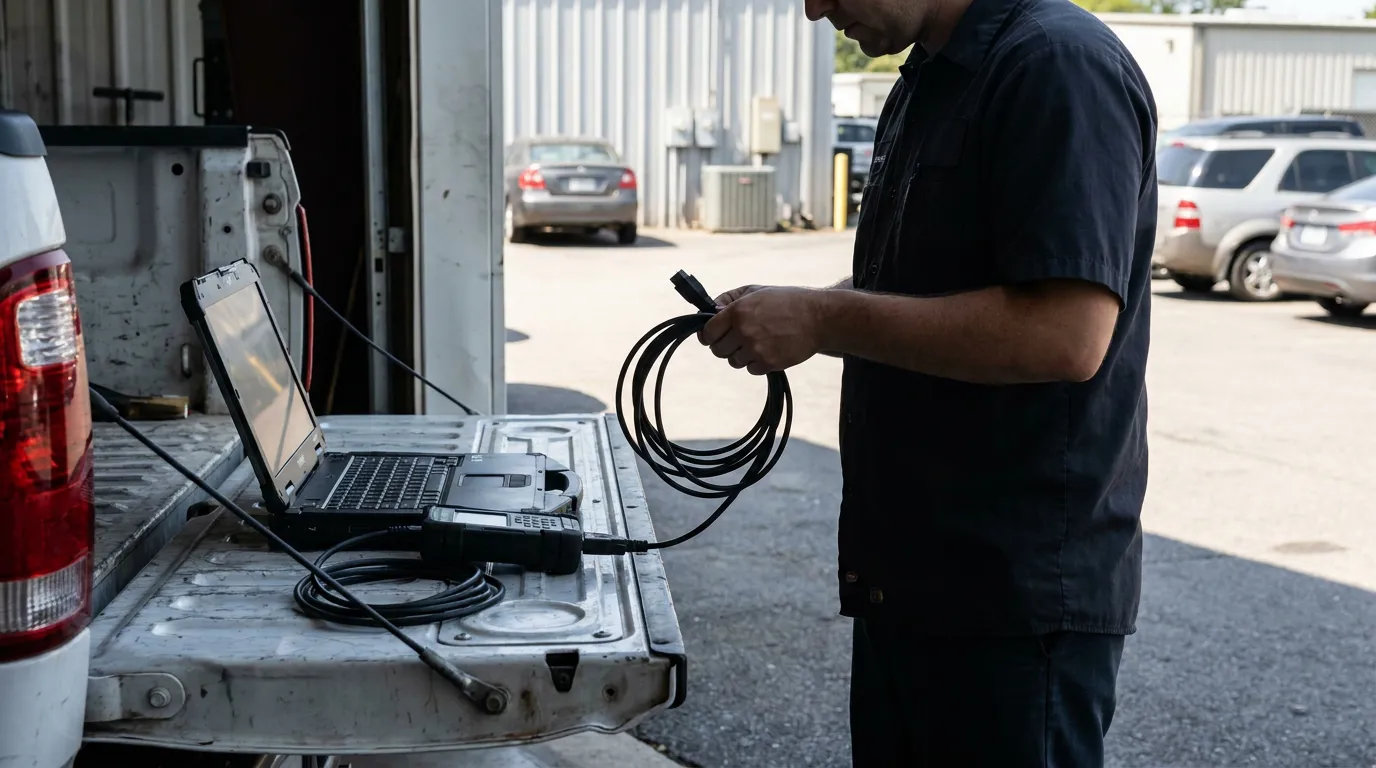
Ownership doesn’t mean automatic access. Retrieval usually requires specialized download hardware and a qualified technician, and a salvage yard or insurer taking possession of the vehicle may complicate things. Acting before the vehicle is repaired, sold, or scrapped can be the difference between accident facts and competing stories.
Fact Two: Access by Third Parties Is Limited by Statute
The statute outlines specific circumstances under which recorded information may be retrieved or disclosed by someone other than the owner: consent of the owner or lessee, a court order or other legal process, retrieval by a technician for servicing or diagnosing the vehicle, and retrieval for research or emergency-response purposes that don’t disclose owner or vehicle identity. The at-fault driver’s insurer generally cannot simply access your vehicle’s memory, and you generally cannot access theirs, without consent or a court’s involvement. Insurance policy provisions and law enforcement authority, including a warrant, may also affect access.
This is where many claims stall. Obtaining the other driver’s data often requires a preservation letter followed by formal discovery in a filed lawsuit, and timing depends on how quickly counsel becomes involved. Courts may weigh relevance and proportionality, so the demand should tie to a genuine dispute about speed, braking, or crash dynamics.
Why Event Data Recorder Crash Evidence Changes Fault Fights
Fault in Illinois is measured as a percentage, which is why objective crash reconstruction data carries weight. Under 735 ILCS 5/2-1116, "the amount of damages recoverable shall be reduced in proportion to the amount of fault attributable to the plaintiff." A few percentage points argued between adjusters can translate into a substantial dollar swing in a serious injury claim.
The stakes rise sharply at the halfway mark. The same statute bars recovery "if the trier of fact finds that the contributory fault on the part of the plaintiff is more than 50% of the proximate cause of the injury." Illinois follows a modified comparative negligence approach, and an insurer that can push a victim past that threshold may owe nothing at all. The statute applies to negligence and product liability actions seeking damages for death, bodily injury, or property damage; different rules can apply to other theories.
Fact Three: Small Data Points Can Move Large Percentages
Objective numbers tend to outperform memory when fault is contested. A recorded pre-impact speed, a brake application five seconds before impact, or a steering input may undercut an argument that the injured person darted out, stopped short, or failed to react. That’s the core value of event data recorder crash evidence in an Illinois injury claim.
No single data point decides a case. Reconstruction analysts read EDR output alongside scene photographs, roadway measurements, vehicle damage, and witness accounts, and courts may weigh conflicting interpretations. Outcomes remain fact-dependent.
| Common Data Point | Why It Matters to a Fault Dispute |
|---|---|
| Pre-crash speed | Tests claims about speeding or sudden acceleration |
| Brake application | Shows whether and when a driver tried to stop |
| Throttle position | Distinguishes coasting from acceleration into impact |
| Delta-V at impact | Supports injury causation and force arguments |
| Seatbelt status | Frequently raised by insurers in damages arguments, though Illinois law limits how seat belt nonuse may be used at trial |
Sorting Real EDR Facts From Black Box Myths
Several persistent misconceptions cause injured people to give up on this evidence too early.
- Myth: black boxes record conversations. Standard automotive EDRs generally capture technical vehicle parameters, not audio, though separately installed dash cameras or telematics may capture audio or video.
- Myth: the device stores hours of driving history. Most modules retain only seconds surrounding a triggering event, and that data can be overwritten.
- Myth: every vehicle has one. Coverage varies by manufacturer and model year, and commercial trucks often use separate engine control modules and telematics instead.
- Myth: the police always download it. Retrieval isn’t routine in every collision, particularly where injuries initially appear minor.
Fact Four: Commercial Trucks Carry Even More Data
Semi-truck collisions frequently involve layered electronic records beyond a passenger-car EDR. Engine control modules, electronic logging devices, dash cameras, and fleet telematics may all exist, and trucking companies typically control them. Federal rules require carriers to retain certain records, such as ELD data, for limited periods, one reason a prompt spoliation notice matters.
Our firm has pursued these claims through resolution. Attorney Jeremy Geller secured a $700,000 settlement against a semi-truck driver and company for leg injuries sustained in a collision. Past results depend on the facts of each case and do not guarantee a similar outcome.
How Illinois Treats Sensitive Vehicle Recordings
Illinois takes a comparable approach with other categories of automated vehicle recordings. For automated traffic law enforcement systems under 625 ILCS 5/11-208.6, recorded images are confidential and shall be made available only to the alleged violator and governmental and law enforcement agencies for purposes of adjudicating a violation of this Section, for statistical purposes, or for other governmental purposes. Any recorded image evidencing a violation may be admissible in any proceeding resulting from the issuance of the citation.
That framework is instructive rather than controlling here, since automated enforcement statutes don’t govern EDR downloads, and Illinois has no comparably detailed public disclosure scheme for black box information. Still, sensitive vehicle recordings in Illinois are generally protected from casual disclosure while remaining potentially reachable through proper legal process.
Fact Five: Reporting Obligations Can Trigger Data Requests
Illinois generally requires drivers involved in a crash to give immediate notice to law enforcement when the collision causes injury, death, or property damage above the statutory threshold, and a written report may also be required. Understanding your basic rights after a collision may help you meet those obligations without volunteering statements that could later be used against you. A police report can also prompt an insurer or investigator to seek vehicle data.
Cooperating with a required report differs from consenting to a data download. You may still be able to decline informal requests to hand over your vehicle or grant access to its module until you’ve spoken with counsel, subject to any cooperation duties in your own policy and to lawful process such as a warrant or court order.
💡 Pro Tip: Photograph the vehicle identification number, odometer, and dashboard warning lights before your car leaves your possession. Those details help a technician confirm which module was installed and whether the recording is likely intact.
Preserving Vehicle Black Box Data in Illinois Before It Disappears
One of the most common reasons this evidence is lost is delay. Vehicles get repaired, totaled, auctioned, or crushed, and ignition cycles can overwrite a stored event. Preservation is a race that generally begins the day of the crash.
Practical steps generally include: telling your insurer in writing not to dispose of the vehicle, identifying where it’s stored, and asking an attorney to send preservation letters to the other driver, their carrier, and any trucking company involved. If you’re still deciding what to do in the immediate aftermath, reviewing smart steps after an accident can help you avoid missteps that are difficult to correct later.
Fact Six: Admissibility Is a Separate Question From Access
Getting the download is only part of the process. Illinois courts may consider foundation, reliability, chain of custody, relevance, and the qualifications of the person interpreting the output before EDR results reach a jury, generally under Illinois Rules of Evidence and expert testimony standards.
The opposing side may challenge interpretation rather than the raw numbers, arguments often focus on tire size, module calibration, sampling intervals, or whether the recorded event corresponds to the collision at issue. An experienced event data recorder crash evidence lawyer can anticipate those objections when building the record.
Fact Seven: The Data Cuts Both Ways
Honest assessment matters, because the same download that helps one party can hurt the other. If the numbers show you were traveling faster than you recalled, that information may surface in litigation. Knowing it early may allow your attorney to evaluate the claim realistically instead of being surprised at a deposition.
This is not a reason to avoid the evidence. In many cases, the recorded data may corroborate the injured person’s account and neutralize an insurer’s speculative theory. Where the picture is mixed, Illinois comparative fault principles may still permit reduced recovery so long as the plaintiff’s share is not more than 50%.
Frequently Asked Questions
1. Does my car definitely have an event data recorder?
Not necessarily. Coverage depends on the manufacturer, model, and year, and some older or specialty vehicles lack a downloadable module. A qualified technician can generally confirm whether your vehicle supports retrieval.
2. Can the other driver’s insurance company download my vehicle’s data without asking?
Generally no. Under 625 ILCS 5/12-608.1, third-party retrieval is limited to defined circumstances such as owner or lessee consent, a court order or other legal process, servicing or diagnosing the vehicle, and research or emergency-response uses that don’t identify the owner or vehicle. Consult counsel before agreeing to any inspection.
3. How long do I have before the data is gone?
There is no fixed answer. Stored events can be overwritten by subsequent ignition cycles, and the physical module may be destroyed when a vehicle is repaired or salvaged. Treating preservation as urgent is generally the safer approach.
4. Will black box information alone prove the other driver was at fault?
Rarely on its own. EDR output is typically one component of a broader reconstruction that includes scene evidence, damage patterns, and witness testimony. Courts weigh the entire record, and outcomes depend on the specific facts.
5. What if I was partly at fault for the crash?
Illinois applies modified comparative negligence under 735 ILCS 5/2-1116. Damages may be reduced by your percentage of fault, and recovery is barred if your contributory fault is more than 50% of the proximate cause of the injury.
Turning a Silent Witness Into Usable Proof
Vehicle black box data in Illinois occupies an unusual space: statutorily recognized, generally owner-controlled, potentially discoverable through proper channels, and remarkably easy to lose. Between 625 ILCS 5/12-608.1 governing vehicle recording devices and 735 ILCS 5/2-1116 setting the comparative fault framework, the legal architecture is clear enough that injured people should not accept an insurer’s fault narrative without asking what the vehicles actually recorded. The practical work is preservation, retrieval, interpretation, and admissibility, and each step may benefit from early legal involvement. Every collision presents its own facts, and no article can predict how a particular claim will resolve.
If an insurance company is blaming you for a crash you did not cause, the attorneys at Trapp & Geller are ready to help you pursue the electronic proof that tells the real story. Call (312) 368-1444 today, or schedule your free consultation to get started.
Disclaimer: This content is for informational purposes only and is not legal advice. Every case is unique, and results may vary. Consult an attorney about your specific circumstances.