
Why Timing Matters in Railroad Hearing Loss Claims
Key Takeaways: The FELA discovery rule generally determines when the three-year clock on a railroad hearing loss claim begins: often not on the first day of noisy work, but when the worker knew or should have known both that an injury existed and that it was connected to railroad employment. Courts apply an objective "knew or should have known" standard, weighing audiogram results, reported symptoms, and workplace warnings, and often interpret accrual exceptions narrowly. Because noise-induced hearing loss develops gradually and often goes unnoticed early, cumulative trauma claims generally cannot be measured from a single incident. FELA is a negligence statute, so a worker generally must also show that employer, co-worker, or equipment negligence played some part in causing the loss. Illinois occupational disease law measures its deadlines differently, generally from the date of disablement and subject to separate exposure-based limits, which is why assuming state rules apply can potentially cause a missed federal deadline. Audiograms, employment histories, and prompt action can often be decisive when a carrier disputes timing.
If you spent years around locomotives, horns, air compressors, and impact tools, and now struggle to follow conversations, you may be dealing with a legally recognized occupational injury. Under the Federal Employers’ Liability Act, a hearing loss claim generally must be filed within three years of accrual under 45 U.S.C. § 56, but the clock does not necessarily begin on your first day of noisy work. Instead, courts apply the FELA discovery rule: the limitations period generally starts when the worker knew or should have known both that he or she suffered an injury and that the injury was connected to railroad employment. That distinction can determine whether a claim proceeds or is dismissed.
If you are worried that time has already run out, do not assume the answer. The team at Trapp & Geller helps Illinois railroaders evaluate FELA claim timing and evidence. Call (312) 368-1444 or contact us now to discuss your situation.
How the FELA Discovery Rule Works
The default FELA rule is a three-year limitations period, and the discovery rule generally addresses when that period begins rather than extending it indefinitely. For a sudden event like a derailment or a fall, the accrual date is usually more apparent. For gradual conditions, courts may need to determine a date of discovery instead of exposure. Judicial commentary on the FELA discovery rule in Kichline addresses exactly this problem in the context of occupational deafness claims.
Kichline v. Consolidated Rail Corporation stands for the principle that the limitations period runs from the point a plaintiff knew or should have known of both the injury and its cause. That decision comes from the Third Circuit and is persuasive rather than binding in Illinois, but because FELA is a uniform federal statute, 45 U.S.C. § 51 et seq., courts here follow the same general discovery framework articulated by the Supreme Court in Urie v. Thompson. Courts, however, often interpret accrual exceptions narrowly. A carrier will often argue that symptoms, hearing tests, or workplace warnings put the worker on notice years earlier.
What "Knew or Should Have Known" Really Means
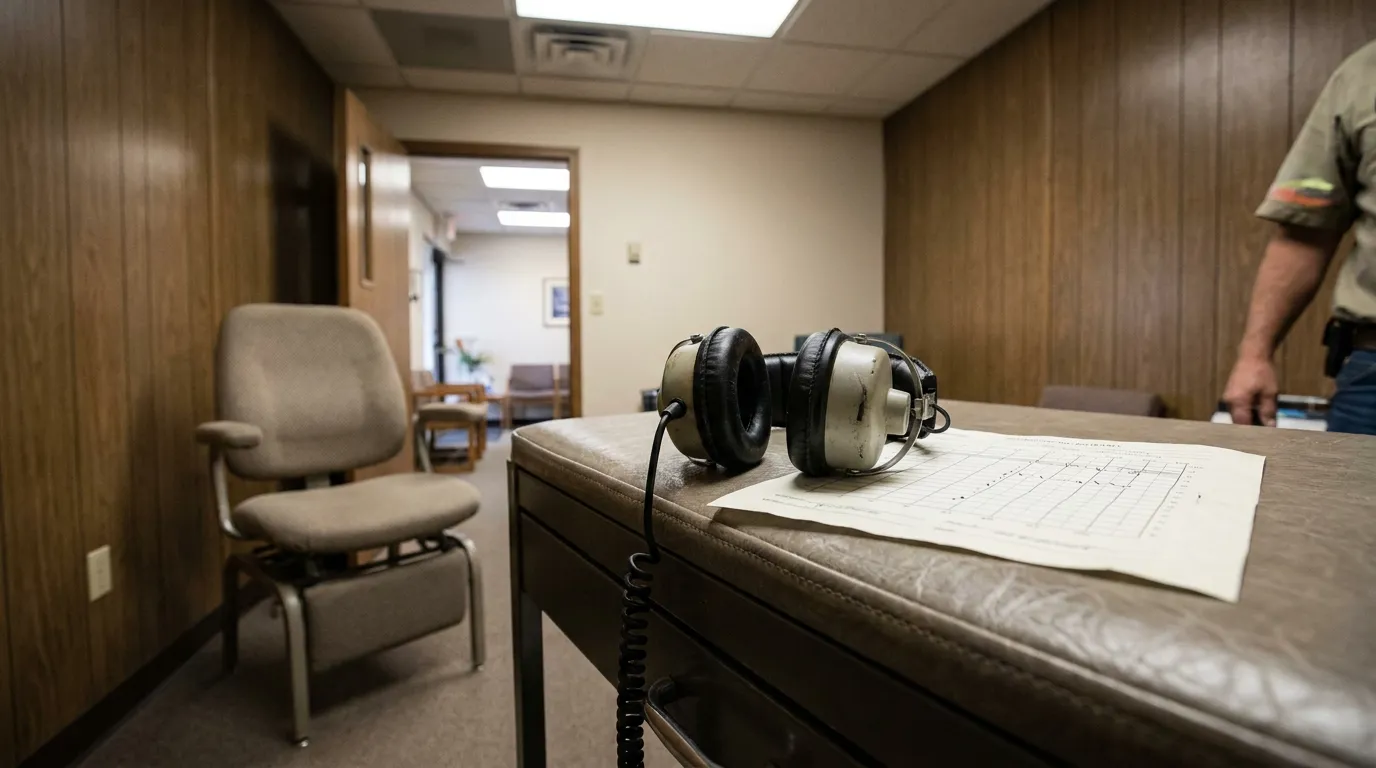
The standard is objective as well as subjective, meaning a court may consider what a reasonable person in your position would have understood. Judges frequently look at when you first noticed difficulty hearing, whether you received audiogram results, whether you were told the results were abnormal, and whether anyone connected the loss to workplace noise. A formal diagnosis may be the triggering event, though it is not required if the worker otherwise had reason to know of the injury and its cause. In other cases, courts have found that earlier warning signs started the clock.
Why Gradual Injuries Are Treated Differently
Cumulative trauma injury claims often do not fit neatly into a single-incident framework. Medical literature reviewing occupational noise exposure describes noise-induced hearing loss as developing gradually across years of exposure and often remaining unnoticed in its early stages. That medical reality is a practical justification for a discovery-based accrual rule, though outcomes depend heavily on the specific record.
Noise Induced Hearing Loss Railroad Workers Face on the Job
Railroad work often involves sustained noise from sources that rarely stop during a shift. Federal review of locomotive cab working conditions has documented noise exposure as a workplace hazard for train crews. Common contributors may include:
- Locomotive engines, horns, and bells
- Air brake releases and compressors
- Impact wrenches, grinders, and track maintenance equipment
- Yard operations, coupling, and switching noise
- Radio traffic played loudly to overcome background sound
Occupational safety standards illustrate why duration can matter as much as volume. OSHA sets a permissible exposure limit of 90 decibels averaged over an eight-hour workday under 29 CFR 1910.95, and the same OSHA noise exposure standards require hearing conservation programs, including audiometric testing, once exposure equals or exceeds an eight-hour time-weighted average of 85 decibels. These are regulatory benchmarks, not automatic proof of negligence, and railroad operations are subject to Federal Railroad Administration rules that may displace OSHA standards in some settings. They may, however, help frame what a carrier knew about the hazard and what protective measures were reasonably available.
💡 Pro Tip: Request copies of every audiogram the railroad has performed on you. Those records often become the central evidence in a dispute over FELA claim timing.
Proving Negligence, Not Just Exposure
FELA is a negligence statute, so exposure alone is generally not enough. A worker pursuing a hearing loss lawsuit typically must show the injury arose in the course of railroad employment and that employer, co-worker, or equipment negligence played at least some part in causing it. FELA’s causation standard is generally more forgiving than ordinary tort law, and contributory negligence reduces rather than bars recovery in most cases, but the plaintiff still carries the burden of proving negligence and causation. Evidence about inadequate hearing protection, missed testing, or failure to reduce noise sources often becomes central.
Evidence That Frequently Matters
Documentation often influences close cases. Helpful materials often include employment and job-assignment histories, audiometric test results, records of hearing protection issued, safety complaints or union grievances, and coworker testimony about conditions in specific cab or yard assignments. Medical opinion connecting the pattern of loss to occupational noise is generally necessary as well. Preserving these items early may help protect your position if a carrier later disputes when you should have known.
How Illinois Occupational Disease Law Compares
Railroad workers covered by FELA are generally outside the state workers’ compensation system, but Illinois law offers a useful structural contrast. The Illinois Workers’ Occupational Diseases Act, 820 ILCS 310, generally requires a claim within three years after the date of disablement where no compensation has been paid, and it separately conditions compensability on the disablement occurring within a defined period after the last exposure, with longer periods for certain diseases such as asbestos-related conditions. The Act also addresses when otherwise-uncovered employers may elect coverage.
| Feature | FELA (federal) | 820 ILCS 310 (Illinois) |
|---|---|---|
| Typical filing window | 3 years | 3 years |
| When the clock starts | Discovery of injury and cause | Date of disablement, subject to exposure-based limits |
| Fault required | Yes, negligence | No, compensation system |
| Applies to railroaders | Generally yes | Generally no for FELA-covered injuries |
These differences matter because a worker who assumes state rules apply may miscalculate a federal deadline. If you have questions about which framework governs your circumstances, our noise induced hearing loss railroad workers lawyer resources explain how FELA claims are handled.
Common Challenges in Railroad Hearing Loss Illinois Cases
Carriers often contest accrual aggressively in occupational hearing loss litigation. Typical defenses include arguments that the worker complained of hearing trouble years earlier, that age-related loss explains the audiogram, or that off-duty noise exposure caused the damage. Some cases involve multiple employers across decades, raising apportionment questions.
Delay can create practical problems beyond the legal deadline. Supervisors retire, noise surveys disappear, and older medical records are purged. Illinois bar journal analysis of the discovery rule in Illinois tort law reflects how fact-intensive accrual disputes can become, though state-law discovery principles are separate from the federal FELA standard. Acting promptly may strengthen both the timeliness argument and the underlying proof.
💡 Pro Tip: Write down when you first noticed difficulty hearing and who you told. Contemporaneous detail is often more persuasive than a later reconstruction.
Frequently Asked Questions
1. How long do I have to file a FELA hearing loss claim?
The general limitations period under FELA is three years from accrual. When that period begins generally depends on when you knew or should have known of the injury and its work connection. Courts often apply this narrowly, so early evaluation is advisable.
2. Does retirement end my ability to file?
Retirement does not automatically bar a claim, but it may complicate the timing analysis. If a diagnosis came after you stopped working, accrual may still be disputed. The outcome depends on the specific evidence.
3. What if I never had a hearing test while employed?
A lack of testing does not necessarily defeat a claim. In some cases, the absence of required audiometric monitoring may become part of the negligence argument, although it does not by itself establish liability. A current evaluation is usually a necessary starting point.
4. Can hearing aids or tinnitus be part of the claim?
Recoverable damages in FELA cases may include medical costs, lost earning capacity, and pain and suffering, subject to proof. Tinnitus frequently accompanies noise damage. What is recoverable always depends on the facts and the evidence presented.
5. Where can I learn more about railroad worker rights?
Educational resources can help you understand the process before contacting anyone. Our FELA claim timing articles cover deadlines, evidence, and settlement issues. General information is not a substitute for advice about your own case.
Protecting Your Position Before the Clock Runs
Hearing loss from railroad work often develops quietly, which is one reason the law recognizes a discovery-based accrual rule. That rule can be a meaningful protection, but it is not a guarantee, and carriers regularly argue that a worker should have connected the dots much earlier. Understanding how courts evaluate the "knew or should have known" question, gathering audiograms and employment records, and moving promptly may improve your position. Every case turns on its own facts, and no article can predict a particular result.
If you believe railroad noise damaged your hearing, an Illinois FELA attorney at Trapp & Geller can review your history and deadlines. Call (312) 368-1444 or reach our team today to schedule a confidential consultation.
Disclaimer: This content is for informational purposes only and is not legal advice. Every case is unique, and results may vary. Consult an attorney about your specific circumstances.