
When Overhead Hazards Turn Into Serious Injuries
Key Takeaways: If you are hit by a falling object on an Illinois construction site, more than one party may be legally responsible, including your employer, general contractors, subcontractors, equipment owners, property owners, and design or management professionals. Workers’ compensation is generally your only remedy against your own employer. It generally covers medical care and lost wages without requiring proof of fault. You may also be able to file a separate third-party negligence lawsuit against non-employer parties who controlled the work or created the hazard, and that lawsuit may recover damages such as pain and suffering. OSHA violations, such as missing toe boards or barricades, can serve as evidence of negligence, but Illinois’s modified comparative fault rules can reduce or bar a recovery. Strict deadlines apply, including 45 days to notify your employer, generally 3 years to file for workers’ compensation, and generally 2 years for most civil personal injury claims.
If you are hit by a falling object on an Illinois construction site, more than one party may be legally responsible. Your employer’s workers’ compensation coverage generally pays for medical care and part of your lost wages. You may also be able to sue a general contractor, subcontractor, equipment owner, or another company that controlled the work or created the hazard. Liability generally depends on who controlled the site, who broke safety rules, and how the accident happened.
Trapp & Geller works with injured construction workers and their families across the Chicago area. If you or someone you love suffered a falling object injury, call (312) 368-1444 or contact us now to talk about your options with Trapp & Geller.
Understanding the OSHA Focus Four Hazards and Struck-By Risks
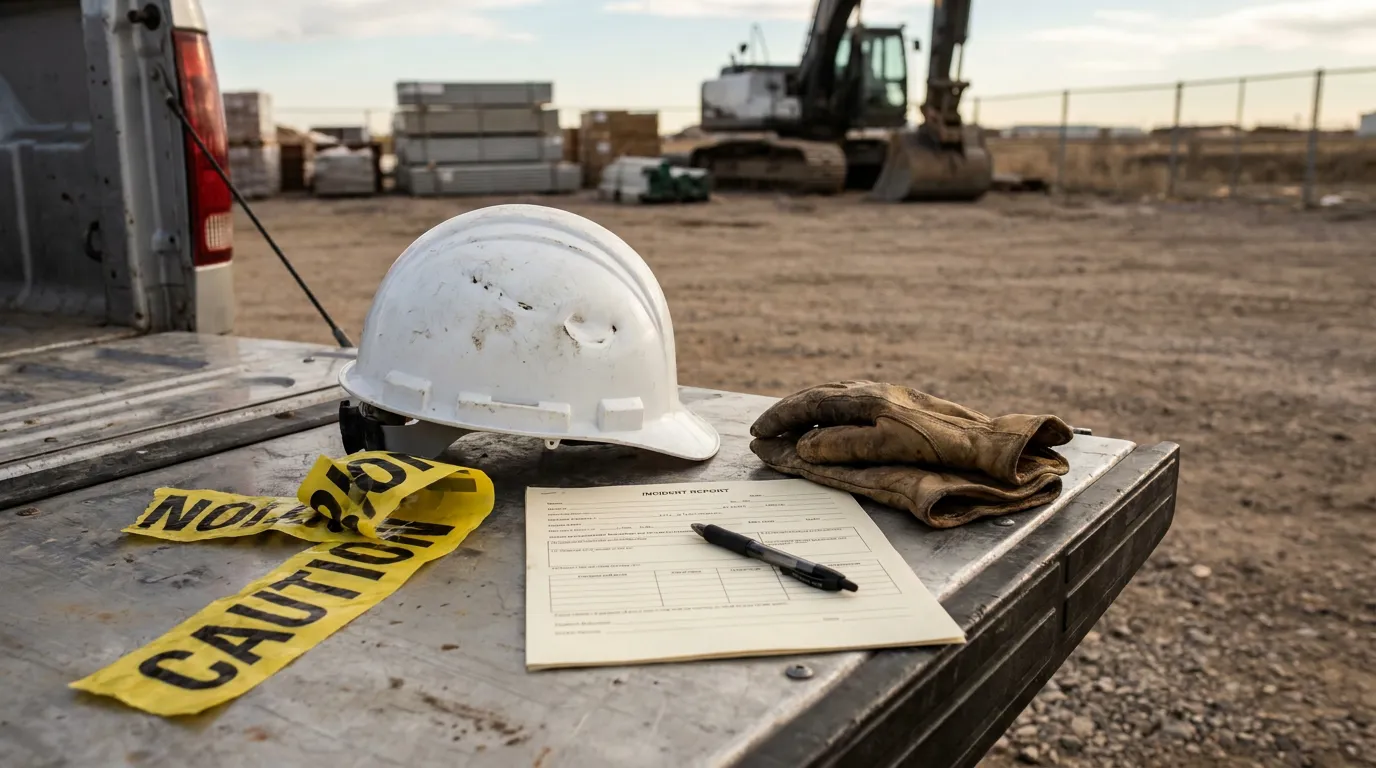
The OSHA Focus Four Hazards are falls, struck-by incidents, caught-in or caught-between incidents, and electrocution. OSHA uses these categories in its construction safety training because they cause a large share of construction worker deaths. A struck-by accident happens when a moving, flying, swinging, or falling object hits a worker. Falling objects are especially dangerous because they often hit the head and upper body.
Struck-by incidents can happen on almost any type of project. Common examples include:
- A hammer, wrench, or drill falling from a scaffold or upper floor
- Bricks, rebar, or lumber sliding off an edge with no toe board or debris net
- Loads falling from cranes, hoists, or forklifts because they were badly rigged
- Demolition debris falling into areas where people were working
- Formwork or other temporary structures collapsing
Construction crews are generally expected to control these overhead hazards. OSHA construction rules generally call for falling object protection, such as toe boards, screens, guardrails, debris nets, canopies, or barricaded areas below the work. A missing toe board or barricade can become important evidence that someone failed to keep workers safe.
💡 Pro Tip: If you can do so safely, take photos of the area above where you were hit, including any missing toe boards, open edges, or loose materials. Conditions on a site can change within hours.
Who Can Be Held Responsible for a Falling Object Injury?
In Illinois, liability for a construction accident often extends beyond your direct employer. A single site may have an owner, a general contractor, many subcontractors, equipment rental companies, and design professionals, each with possible duties tied to the hazard that hurt you. For a broader look, see our guide on who is liable after a construction accident.
General Contractor Liability
General contractors often control site-wide safety, so injured workers often sue them in falling object cases. A general contractor that coordinates trades, sets schedules, or decides where overhead work happens may have a duty to protect workers below. Illinois follows Section 414 of the Restatement (Second) of Torts. Under that rule, liability usually depends on how much control the contractor kept over the work and safety practices, and sometimes on whether it knew or should have known about the hazard. Courts may look at contracts, safety manuals, meeting records, and day-to-day site events.
Subcontractors, Equipment Owners, and Property Owners
A subcontractor from another trade may be liable if its workers dropped materials or left tools unsecured. Equipment owners and rental companies may be responsible when a crane, hoist, or lift was defective or poorly maintained. Property owners may also share liability under premises liability rules in some cases. The former Illinois Structural Work Act, codified at 740 ILCS 150/1 through 150/9, imposed liability on owners, contractors, subcontractors, and others "having charge of" construction work, but Illinois has since repealed that Act. The separate and still-active Employee Classification Act, at 820 ILCS 185/5, defines "Contractor" to include both a general contractor and a subcontractor, but it is not part of the repealed Structural Work Act.
Design and Management Professionals
Architects, engineers, and construction managers can sometimes be held responsible. Under 735 ILCS 5/13-214, Illinois sets deadlines for claims against people who design, plan, supervise, observe, or manage construction. That law shows such claims can be brought, though it does not itself create liability. If a flawed design or poor site management created the overhead hazard, those professionals may share responsibility, depending on their contract duties and actual control.
How Illinois Law Has Treated "Having Charge Of" the Work
For decades, the Illinois Structural Work Act made anyone "having charge of" construction work liable. Under the former 740 ILCS 150/9, owners, contractors, subcontractors, foremen, and others in charge could be liable for willful violations involving scaffolds, hoists, cranes, and similar structures. The legislature repealed the Act through P.A. 89-2, effective February 14, 1995, so it generally does not apply to injuries today.
Today, injured workers generally bring falling object claims under negligence and premises liability law. OSHA violations can be offered as evidence of negligence, but in Illinois they generally do not prove negligence on their own. By contrast, 820 ILCS 310/3 treats an employer’s violation of OSHA rules as negligence in certain occupational disease claims. That rule is narrow and does not apply to typical third-party construction injury claims.
Workers’ Compensation vs. Third-Party Claims
Workers’ compensation is generally your only remedy against your own employer, but you may still be able to file a separate third-party lawsuit. Under 820 ILCS 305/5, an employee usually cannot sue the employer for negligence, with limited exceptions such as a specific intent to injure. You may still be able to sue a third party whose negligence caused your injury, such as a general contractor, another subcontractor, or an equipment owner.
| Factor | Workers’ Compensation | Third-Party Lawsuit |
|---|---|---|
| Fault required? | Generally no | Yes, you must prove negligence |
| Who pays | Employer or its insurer | Negligent non-employer party, usually through its insurer |
| Pain and suffering | Generally not available | May be recoverable |
| Key deadline | 3 years from accident, or 2 years from last payment if later | Generally 2 years from injury, with some exceptions |
If you recover from a third party, your employer generally has a lien, and you must repay what it paid in benefits out of your recovery. Under 820 ILCS 305/5(b), the employer must pay its share of attorney’s fees and costs. No settlement is valid without written consent from both the employer and the employee, unless the Commission or a court approves it.
Proving Your Illinois Struck-By Claim
A strong Illinois struck-by claim usually depends on proving duty, breach, causation, and the full extent of your damages. Evidence may include OSHA inspection reports, site safety plans, witness statements, photos, and daily logs. Medical records can connect the accident to your injuries and support claims for future care.
Head Injuries on Construction Sites
A head injury on a construction site can have lasting effects that are not obvious right away. Even with a hard hat, a falling object may cause a concussion or traumatic brain injury. Families looking for support can find traumatic brain injury resources through Mayo Clinic. Damages in a third-party case may include future medical costs, lost earning capacity, and disability.
How Comparative Fault Can Affect Recovery
Illinois uses modified comparative fault, so defendants often argue that the injured worker shared the blame. Under 735 ILCS 5/2-1116, your damages are reduced by your share of fault, and you cannot recover if your share is more than 50%. Wrongful death cases follow the same rule under 740 ILCS 180/2. Defense claims, such as saying the worker was not wearing a hard hat, can reduce or bar a recovery, so careful evidence gathering matters. Comparative fault generally does not reduce workers’ compensation benefits.
Deadlines That Can Affect Your Case
Illinois sets strict deadlines, and missing one may permanently bar your claim. Under 820 ILCS 305/6(c), you must notify your employer as soon as you can and no later than 45 days after the accident, orally or in writing. Under 820 ILCS 305/6(d), your workers’ compensation claim is generally due within 3 years after the accident, or within 2 years after the last benefit payment, whichever is later.
Civil lawsuit deadlines are separate from workers’ compensation deadlines. You must file most personal injury claims within 2 years under 735 ILCS 5/13-202. Claims against design or construction professionals fall under the construction statute of repose in 735 ILCS 5/13-214. That law allows 4 years from when you knew or reasonably should have known of the act or omission, and generally bars most claims more than 10 years after it. Deadlines do not pause automatically.
Frequently Asked Questions
1. Can I sue my employer if I was hit by a falling object?
Generally, no. Under 820 ILCS 305/5, workers’ compensation is usually your only remedy against your employer, with narrow exceptions. You may still have a third-party claim against other negligent parties.
2. What if a worker from another company dropped the object?
That worker’s employer may be liable as a third party, generally for its employee’s negligence on the job. The details depend on who controlled the work and whether crews followed safety rules.
3. Can my family file a wrongful death claim?
Yes, in many cases. Under 740 ILCS 180/1, your family may sue any person or company that would have been liable if the worker had survived. Your family generally cannot bring a wrongful death claim against the worker’s own employer because workers’ compensation is the only remedy against the employer. Wrongful death claims generally must be filed within 2 years of the death. The 5-year extension in 740 ILCS 180/2 applies only to violent intentional acts, and only against the person who committed them.
4. Do OSHA violations prove my case?
Not on their own. Illinois generally treats OSHA violations as evidence of negligence, not as proof of it. Still, violations such as missing toe boards or unprotected overhead work may be strong evidence that someone failed to use reasonable care.
Protecting Your Rights After a Struck-By Accident
A falling object injury may lead to workers’ compensation benefits and, in some cases, a third-party claim against contractors or other responsible parties. Knowing the OSHA Focus Four Hazards, Illinois liability rules, comparative fault, and strict filing deadlines can help you protect your recovery. Every case depends on its own facts, so getting help early may make a real difference.
An experienced construction accident attorney can help you identify every party who may be responsible. Call Trapp & Geller at (312) 368-1444 or schedule your consultation today to discuss your case.
Disclaimer: This content is for informational purposes only and is not legal advice. Every case is unique, and results may vary. Consult an attorney about your specific circumstances.