
Hanging in a Fall Arrest Harness After a Fall: What Illinois Workers Should Know
Key Takeaways: Illinois workers left hanging in a fall arrest harness can suffer spinal and skull fractures, organ damage, or suspension trauma, even when the harness works as designed. OSHA generally requires fall protection at 6 feet or more in construction, and if a personal fall arrest system is used, requires a full body harness and prompt rescue. Violations can help support a negligence claim. Most injured workers can seek benefits under the Illinois Workers’ Compensation Act regardless of fault, including minimum awards for certain fractures and organ loss, plus wage differential benefits. You may also bring a separate third-party claim against a negligent contractor or harness manufacturer for damages such as pain and suffering, though your employer generally has a lien on that recovery. Strict deadlines apply: notify your employer within 45 days, file a workers’ compensation claim within 3 years of the accident or 2 years after the last payment, whichever is later, and generally file a third-party lawsuit within 2 years. Because suspension trauma symptoms can appear late, get medical care quickly.
A safety harness that catches you during a fall can still leave you badly hurt, and Illinois law may give you more than one way to seek compensation. Workers left hanging in a harness after an Illinois construction fall may suffer spinal fractures, organ damage, or suspension trauma. You may have a workers’ compensation claim against your employer and a separate negligence or product liability claim against a third party, such as a harness manufacturer or general contractor. Both have strict deadlines, so knowing your rights early can protect your recovery.
If a fall arrest system left you or someone you love injured, you do not have to work through the claims process alone. The construction injury team at Trapp & Geller helps injured workers across the Chicago area pursue the benefits and damages the law allows. Call (312) 368-1444 or contact us now to talk about your situation.
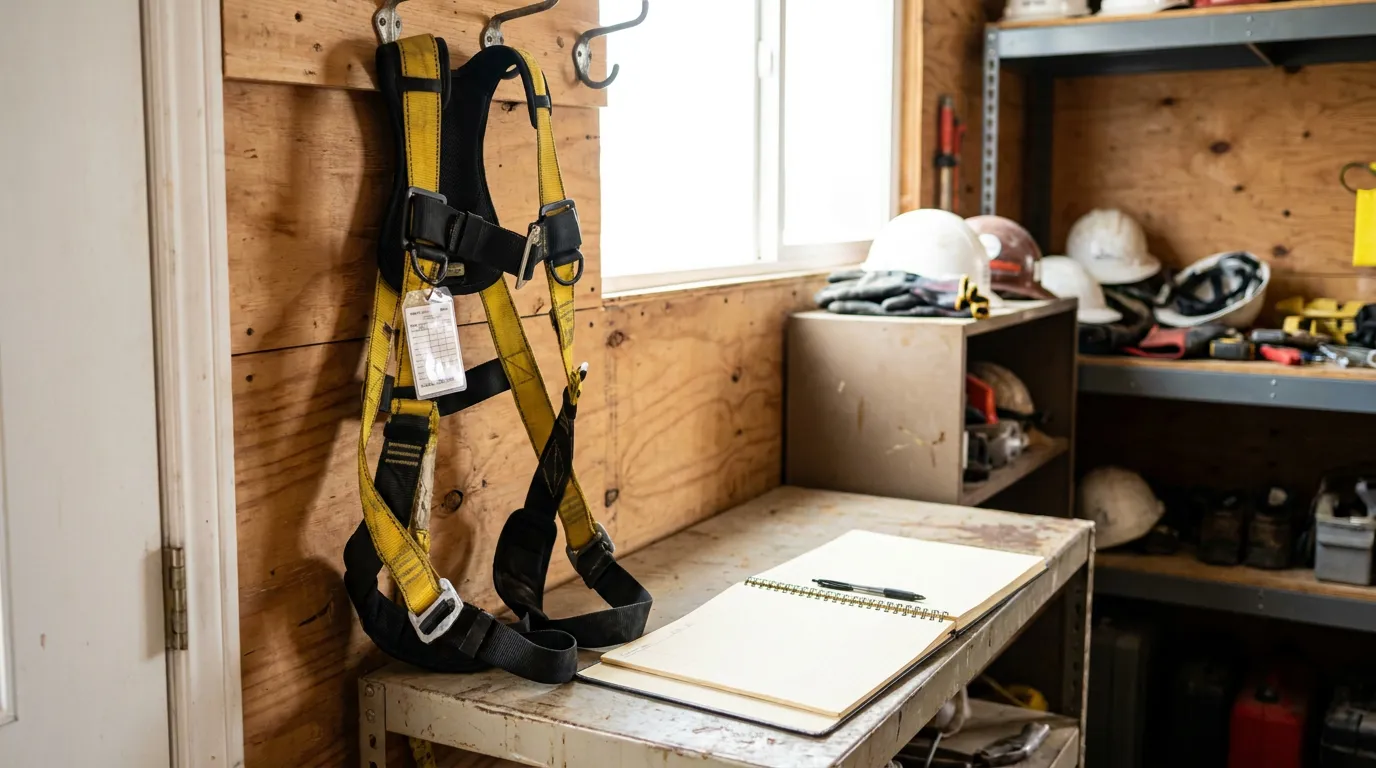
How a Harness Can Injure the Worker It Catches
A personal fall arrest system stops a fall, but the stop itself puts heavy force on the body. Under 29 CFR 1926.502(d)(16), a system used with a body harness must limit the maximum arresting force on a worker to 1,800 pounds and stop the worker within a deceleration distance of 3.5 feet. Even when equipment works as designed, that force may contribute to serious injuries. A lanyard that is too long, a wrong anchor point, or defective gear can make the forces much worse.
Hard Stops and Impact Injuries
Many fall arrest injuries come from the sudden jolt at the end of the fall. Workers may suffer:
- Fractured vertebrae, transverse processes, or skull bones
- Facial bone fractures from swinging into a structure
- Damage to the kidneys, spleen, or lungs
- Soft tissue injuries to the groin, chest, and shoulders where harness straps load
Federal rules address how the harness spreads these forces. Under 29 CFR 1926.502(d), body belts have not been acceptable as part of a personal fall arrest system since January 1, 1998, so a full body harness is required. If a worker was given a body belt or a poorly fitted harness, that may become important evidence of fault.
Suspension Trauma and Harness Hang Syndrome
Suspension trauma, also called harness hang syndrome or orthostatic intolerance, can turn a survivable fall into a medical emergency. Medical research in Wilderness & Environmental Medicine explains how harness suspension physiology can cause blood to pool in the legs, reduce blood flow back to the heart, and lead to loss of consciousness or death if the worker is not rescued quickly. Symptoms may appear or worsen after rescue, so get evaluated even if you feel fine at first.
💡 Pro Tip: Tell every treating doctor how long you hung in the harness before rescue. That detail can help link the fall to later symptoms such as fainting, kidney problems, or circulation issues.
What the OSHA 6 Foot Fall Protection Rule Requires on Construction Sites
The OSHA 6 foot fall protection rule, 29 CFR 1926.501(b)(1), generally requires construction employers to protect workers on walking or working surfaces 6 feet or more above a lower level. Protection can include guardrails, safety nets, or personal fall arrest systems. Exceptions apply to certain work covered by other OSHA standards, such as scaffolds and ladders.
One of the most important requirements deals directly with the danger of being left hanging. Under 29 CFR 1926.502(d)(20), "The employer shall provide for prompt rescue of employees in the event of a fall or shall assure that employees are able to rescue themselves." A site with no rescue plan, no trained rescuers, or no equipment to reach a suspended worker may have violated this standard.
How OSHA Violations Can Support Your Claim
OSHA violations do not create a lawsuit by themselves, but they may serve as important evidence. In a third-party negligence case, a violation may help show that a contractor or other party failed to use reasonable care, though it does not automatically prove negligence. In a workers’ compensation claim, fault generally does not matter, but the facts of the fall still help document how you were hurt.
Workers’ Compensation Benefits for a Safety Harness Injury
Most injured construction workers in Illinois can seek benefits under the Illinois Workers’ Compensation Act, 820 ILCS 305. These benefits are generally available regardless of fault, as long as the injury arose out of and in the course of employment. The Act also sets minimum awards for certain injuries common in fall arrest incidents.
| Injury | Minimum Partial Disability Award under 820 ILCS 305/8(d)(2) |
|---|---|
| Each fractured vertebra | 6 weeks |
| Fractured skull | 6 weeks |
| Each fractured transverse process | 3 weeks |
| Each listed facial bone fracture | 2 weeks |
| Loss of a kidney, spleen, or lung | 10 weeks |
Workers who cannot return to the same pay may qualify for wage differential benefits. Under 820 ILCS 305/8(d)(1), these benefits generally equal 66-2/3% of the difference between your average weekly earnings before the accident and what you can earn in suitable work afterward, subject to statutory maximums. For injuries on or after September 1, 2011, they generally run until age 67 or 5 years after the award becomes final, whichever is later. Wage differential benefits and 8(d)(2) awards are generally alternatives, so you usually cannot collect both for the same injury. Under 820 ILCS 305/8(a), employers must also pay for reasonable vocational rehabilitation when appropriate.
Union Contracts May Change the Process
Union construction workers should check their collective bargaining agreement early. Under 820 ILCS 305/4b(b), construction employers and labor organizations may agree to alternative dispute resolution, an agreed list of medical providers, light duty programs, and joint safety committees.
Third-Party Claims Against Negligent Contractors and Manufacturers
Workers’ compensation usually does not cover pain and suffering, but a third-party lawsuit may. If a harness or lanyard maker sold defective gear, or a general contractor failed to plan a rescue, you may have a negligence or product liability claim against that party while still receiving benefits. Your employer generally cannot be sued because of the Act’s exclusive remedy rule. If you recover money from the third party, your employer generally has a lien on that recovery for the compensation it paid.
The rules on employer reimbursement are technical. Under 820 ILCS 305/5(b), the employer pays its share of the costs of collecting the recovery and, unless otherwise agreed, 25% of its reimbursement as attorney fees. A settlement generally needs written consent from both employer and employee. A construction fall attorney in Illinois can review whether a third-party claim exists in your case.
Deadlines That Can Make or Break Your Case
Illinois sets separate deadlines for workers’ compensation claims and civil lawsuits, and missing either one can bar recovery.
- Notice to employer: Under 820 ILCS 305/6(c), notify your employer as soon as practicable and no later than 45 days after the accident. Late notice does not bar the claim unless the employer proves undue prejudice, but no notice at all within 45 days can bar the claim.
- Workers’ compensation filing: Under 820 ILCS 305/6(d), file within 3 years of the accident, or within 2 years of the last payment of compensation, whichever is later.
- Third-party lawsuit: Under 735 ILCS 5/13-202, personal injury actions generally must be filed within 2 years after the cause of action accrues. Product liability claims may also be subject to separate repose limits.
Exceptions exist, but courts interpret them narrowly. Because suspension trauma symptoms can show up late, acting promptly is the safest course.
💡 Pro Tip: Ask whether your employer filed an injury report. Under 820 ILCS 305/6(b), employers must report injuries causing more than 3 lost scheduled work days to the Commission. These reports can become useful evidence.
Taking the right steps early can protect both your health and your claim. Get medical care, report the accident, photograph your gear if possible, and write down witness names. For a broader checklist, review steps after a construction injury.
Frequently Asked Questions
1. Can I be injured even if my harness worked correctly?
Yes, a properly working harness can still cause injuries. The arresting force can contribute to fractures or organ damage, and hanging too long can cause suspension trauma.
2. What is the OSHA 6 foot fall protection rule?
It generally requires construction employers to provide fall protection for workers at heights of 6 feet or more above a lower level. Violations may serve as evidence in a negligence claim against a third party.
3. Can I get workers’ comp and also sue someone else?
In many cases, yes. You may receive workers’ compensation and also pursue a claim against a party other than your employer, such as a contractor or equipment maker. Your employer generally has a lien on any recovery.
4. How long do I have to file?
Generally, you must notify your employer within 45 days and file a workers’ compensation claim within 3 years of the accident or 2 years after the last payment, whichever is later. A third-party lawsuit generally must be filed within 2 years.
5. What if my symptoms appeared days after the fall?
Delayed symptoms can occur with harness hang syndrome and internal injuries. Get medical care right away and report the injury within the 45-day notice period.
Protecting Your Recovery After a Fall Arrest Injury
A personal fall arrest system injury can affect your health, your income, and your family’s future. Illinois law may give you workers’ compensation benefits, and you may also have a third-party claim if a contractor or manufacturer cut corners. Every case depends on its facts, and deadlines apply.
The sooner you get guidance, the more options you may keep open. Reach out to Trapp & Geller to talk about your harness injury and your next steps. Call (312) 368-1444 or schedule your consultation today.
Disclaimer: This content is for informational purposes only and is not legal advice. Every case is unique, and results may vary. Consult an attorney about your specific circumstances.