
Your Car Lost Value in the Crash. Who Pays for That?
Key Takeaways: Yes, Illinois drivers who were not at fault can often recover diminished value from the at-fault driver’s liability insurance through a third-party property damage claim, but payment is not automatic. Diminished value is the gap between what your car was worth just before the crash and what it is worth after repairs. Newer, luxury and structurally damaged vehicles usually lose the most. To succeed, you generally must prove the other driver was negligent, that the crash caused the loss, and how much value was lost. Useful evidence includes independent appraisals, repair records and dealer quotes. Under Illinois modified comparative fault rules, your recovery is reduced by your share of fault, and it is barred if you are more than 50% at fault. Rideshare crashes may come with much more coverage: at least $1,000,000 once a ride has been accepted. Insurers often deny or lowball these claims, so consider answering with documented market evidence and reading any release carefully before signing.
Yes, in many cases you can seek diminished value from the at-fault driver’s insurance in Illinois, but the claim is not automatic. A car that has been in a crash often sells for less than an identical car with a clean history, even after good repairs. That difference is called diminished value. Illinois handles property damage claims under a fault-based system, so a not-at-fault driver may be able to include diminished value in a property damage claim against the negligent driver, as long as they can prove fault, causation, and the amount of the loss. Recovery depends on the insurance available, the evidence, and how fault is divided, and is generally capped by the at-fault driver’s policy limits.
If an insurer is refusing to pay for your car’s lost value, or for your injuries, you can get help with your claim. Trapp & Geller helps crash victims across Illinois deal with insurance pushback and pursue full compensation. Call (312) 368-1444 or contact us now to talk about your situation.
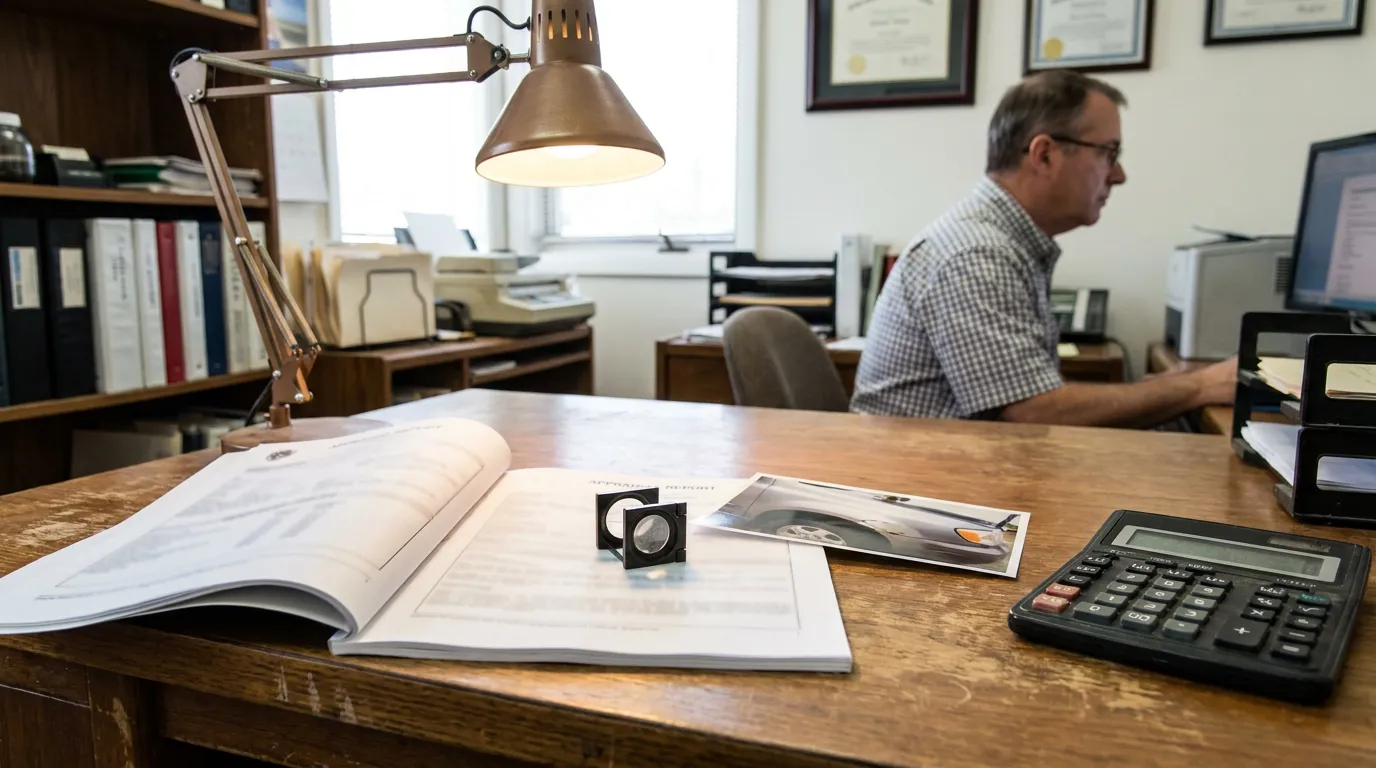
What Diminished Value Means After an Illinois Car Accident
Diminished value is the gap between what your vehicle was worth just before the crash and what it is worth after repairs. Buyers and dealers can check vehicle history reports, and a reported accident often lowers the price a car will bring. Newer cars, luxury models, and vehicles with frame or structural damage tend to lose the most value. Owners usually find this out when they trade in or sell the car, sometimes months after the claim has closed.
Third-Party vs. First-Party Claims
A third-party diminished value claim in Illinois is made against the at-fault driver’s liability coverage, not your own policy. A claim against your own insurer is controlled by your policy’s wording. The Illinois Supreme Court held in Avery v. State Farm (2005) that a standard policy promising to repair or replace damaged parts did not require payment for diminished value. A third-party claim rests on the other driver’s negligence, so you must show that driver caused the crash and that the crash caused the drop in value.
Why Damage Goes Beyond the Repair Bill
Illinois law recognizes in some settings that vehicle damage can cause losses beyond repair costs. For example, Illinois’s rental vehicle laws (625 ILCS 27/5(b)) refer to the costs of repairing, servicing, and replacing vehicles, plus the lost economic use of cars while out of service. That provision is not direct authority for diminished value claims. Whether diminished value is recoverable in your case depends on Illinois damages principles and the facts.
How a Diminished Value Claim Illinois Drivers File Actually Works
A diminished value claim in Illinois generally follows the same path as any other negligence-based property damage claim. You notify the at-fault driver’s insurer, document the loss, and negotiate. If talks fail, you may file a lawsuit. In Illinois, that generally must happen within five years of the crash for property damage (735 ILCS 5/13-205), and within two years for personal injury. For the basics of how crash costs are usually split, see our overview of who pays after a crash.
Evidence That Strengthens Your Claim
Strong documentation is often what separates a paid diminished value claim from a denied one. Insurers commonly argue that a properly repaired car has lost nothing, so build your record early. Helpful evidence may include:
- Photos of the scene and the damage taken before repairs
- The police crash report and witness contact details
- Itemized repair invoices showing structural or frame work
- A written appraisal from a qualified, independent appraiser
- Dealer trade-in quotes from before and after the repair
- Dashcam footage, nearby surveillance video, and vehicle event data
💡 Pro Tip: Ask the body shop for the full repair file, including supplemental estimates. Hidden damage found partway through repairs can help show why the vehicle’s market value dropped.
How Fault Rules Can Reduce or Bar Your Recovery
Illinois uses modified comparative fault, and it can directly change how much diminished value you recover. Under 735 ILCS 5/2-1116, the rule covers negligence-based actions for "physical damage to property." A plaintiff is barred from recovery if their fault is more than 50% of the proximate cause of the damage. If your fault is 50% or less, you may still recover, but your damages are reduced by your share of fault.
Here is how that works in practice. Say your car lost $8,000 in value and a jury (or judge) finds you 20% at fault. Your recovery would drop to $6,400. If you were found 51% at fault, you would recover nothing. Insurers know these rules, and adjusters may try to shift blame onto you to shrink or eliminate a payout.
💡 Pro Tip: Avoid giving a recorded statement to the other driver’s insurer before you understand the facts. An offhand comment about speed or distraction could later be used to argue you share the blame.
Special Rules When a Rideshare Driver Hits You
If an Uber or Lyft driver caused your crash, far more coverage may be available than in a typical crash with a private driver. The Transportation Network Providers Act sets coverage tiers based on what the driver was doing in the app. Under Illinois rideshare insurance law, the required minimums shift depending on the driver’s app status at the moment of the crash. If the driver was offline, generally only the driver’s personal policy applies.
| Driver Status | Required Coverage | Source |
|---|---|---|
| Logged in, no ride accepted | $50,000 per person / $100,000 per incident for injury; $25,000 property damage; TNC provides contingent backup | 625 ILCS 57/10(b)(1)-(2) |
| Ride accepted until trip ends | $1,000,000 primary for death, injury, and property damage | 625 ILCS 57/10(c)(1) |
Additional Protections for Rideshare Crash Victims
Several provisions in 625 ILCS 57/10 may help victims get paid. During a ride, the TNC’s required coverage does not depend on the driver’s personal insurer denying the claim first. If the driver’s own insurance has lapsed or does not provide the required coverage, the TNC’s coverage must apply from the first dollar. The required amounts are minimum insurance levels, not caps on what a court may award, although collecting more than the available coverage may be difficult.
Common Insurance Tactics and How to Respond
Insurers may push back on diminished value claims in predictable ways. Some say Illinois does not allow these claims. That is generally not accurate for third-party claims, although first-party policies may exclude them. Others use formulas that produce very low numbers, or argue that a good repair restored full value. A negligence-based property damage claim generally aims to make you whole, and courts may look at real market evidence, not just an insurer’s internal formula.
Responding well usually means answering with evidence, not arguments. An independent appraisal, comparable sales data, and dealer quotes can push back against a lowball offer. Illinois financial responsibility requirements (Sections 7-203 and 7-601 of the Illinois Vehicle Code) set the minimum liability coverage at $25,000 per person and $50,000 per crash for injury, plus $20,000 for property damage. Because $20,000 may not cover both repairs and lost value, an Illinois car accident lawyer can help you identify other possible sources of recovery when the at-fault driver’s limits are low.
💡 Pro Tip: Before you sign any property damage release, read it carefully. Some releases are broad enough to waive a later diminished value claim.
Frequently Asked Questions
1. Can I file a diminished value claim in Illinois if my car was fully repaired?
Yes, in many cases. Diminished value is about lost market value after repair, not unfinished repair work. You will generally need proof, such as an appraisal, showing the car is worth less because of its accident history.
2. What if I was partly at fault for the crash?
Under 735 ILCS 5/2-1116, you may still recover if your fault is 50% or less, but your damages are reduced by your percentage of fault. If your fault is more than 50%, recovery is barred.
3. Can I claim diminished value against my own insurance company?
That depends on your policy language. Many policies limit or exclude this coverage, and Illinois courts have enforced that language. A third-party claim against the at-fault driver’s liability insurance is usually the main route.
4. Does rideshare insurance cover diminished value?
Rideshare liability coverage under 625 ILCS 57/10 includes property damage, which may cover diminished value if you can prove it. The amount depends on whether the driver was logged in only or had accepted a ride.
5. Can I pursue diminished value and injury claims together?
Often, yes. Property damage and bodily injury claims can arise from the same crash, though insurers may handle them separately and different filing deadlines apply. Read release language carefully so that settling one claim does not waive the other.
Protecting Your Vehicle’s Value and Your Rights
Your car’s loss in value is a real financial harm, and Illinois law may let you recover it from the driver who caused the crash. Success generally depends on proving negligence, documenting the market loss, getting past comparative fault arguments, and finding all available coverage, including rideshare policies. Every case turns on its own facts, so results vary.
You do not have to accept a denial or a lowball offer without asking questions. Trapp & Geller helps Illinois crash victims pursue full compensation for vehicle damage and injuries. Call (312) 368-1444 or schedule a consultation today.
Disclaimer: This content is for informational purposes only and is not legal advice. Every case is unique, and results may vary. Consult an attorney about your specific circumstances.