
When a Stalled OSHA Whistleblower Case Can Move Into Federal Court
Key Takeaways: The 210-day rule under the Federal Railroad Safety Act at 49 U.S.C. § 20109(d)(3) lets railroad workers file an original retaliation lawsuit in federal district court when the Secretary of Labor has not issued a final decision within 210 days of the OSHA complaint, provided the delay is not caused by the worker’s bad faith. The 210-day clock runs from the OSHA filing date, while a separate 180-day deadline runs from the retaliatory act itself. Once in district court, the case receives de novo review with no amount-in-controversy threshold, and a jury trial may be requested. Remedies remain the same make-whole relief available administratively: reinstatement, back pay, compensatory damages, attorney’s fees, and punitive damages capped at $250,000. Filing does not stay an existing DOL order unless the court orders one. Courts have rejected arguments that full administrative exhaustion is required, and defenses like waiver and laches can bar workers who wait too long to invoke the provision.
If you reported a safety violation or on-duty injury and your railroad retaliated, your case usually starts at OSHA. The 210-day rule at 49 U.S.C. § 20109(d)(3) allows you to stop waiting on the Department of Labor and file your own lawsuit in federal district court if the Secretary has not issued a final decision within 210 days of your complaint, provided the delay is not due to your bad faith. It is one of the most practical tools rail workers have when an administrative case stalls.
If your OSHA retaliation complaint has been sitting without a decision, timing decisions matter. The attorneys at Trapp & Geller represent injured and retaliated-against rail workers throughout Chicago, Cook County, and downstate Illinois. Call (312) 368-1444 or contact us now to discuss where your claim stands and what options remain open.
How 49 USC 20109 Whistleblower Protection Works Before You Ever Reach Court
The Federal Railroad Safety Act shields railroad workers from retaliation, and its whistleblower provision is enforced through OSHA. Congress expanded these protections in 2007 through the 9/11 Commission Act and transferred enforcement to DOL. The statute covers employees of railroad carriers and their contractors and subcontractors.
The protected conduct is broader than many rail workers assume. The act protects railroad employees from retaliation when they report safety or security violations, refuse to work under certain hazardous conditions, report work-related injuries or illnesses, or request medical treatment. That injury-reporting category matters enormously because discipline following an injury report is one of the most common retaliation triggers.
The Administrative Pathway Comes First
The FRSA process begins with a complaint filed with OSHA within 180 days of the alleged violation. The matter can proceed through an OSHA investigation, a hearing before an Administrative Law Judge, and review by the Administrative Review Board. The procedural regulations appear at 29 C.F.R. Part 1982.
Why the 210-Day Kick-Out Rule Exists
The kick-out provision exists because administrative adjudication can take far longer than Congress intended. OSHA’s rulemaking record describes a statutory "kick-out" provision allowing complainants to file in district court if the Secretary has not issued a final decision within 210 days of filing. This framework was built through an interim final rule published in 2010.
The practical effect is a release valve. Instead of being trapped indefinitely in an agency queue, a rail worker who has waited more than 210 days without a final decision, where that delay is not the result of bad faith, may bring an original action for de novo federal review. Under 29 C.F.R. § 1982.114, if no final order has been issued within 210 days and the delay is not due to the complainant’s bad faith, the worker may file a de novo action in district court; once filed, the Department of Labor ordinarily loses jurisdiction over the administrative proceeding. "De novo" means the district court considers the case fresh, without deference to the administrative record, and the same burden-shifting standard applies: the worker must show protected activity was a contributing factor, and the railroad can avoid liability only by proving by clear and convincing evidence it would have taken the same action anyway.
What the Statute Actually Grants You in District Court
The statutory text of 49 U.S.C. § 20109(d)(3) gives the district court jurisdiction without regard to the amount in controversy, and the case may be tried before a jury at the employee’s request. You can review the full FRSA whistleblower statute text published by the Department of Labor. A jury trial right is a meaningful strategic difference from an ALJ proceeding.
Remedies do not shrink because you changed forums. Under the statute, an employee prevailing is entitled to all relief necessary to make the employee whole, including reinstatement with the same seniority, back pay with interest, compensation for special damages such as litigation costs and reasonable attorney’s fees, and punitive damages up to $250,000. Whether the case resolves administratively or in court, that make-whole standard frames available relief.
| Feature | OSHA/DOL Administrative Track | Federal Court After Kick-Out |
|---|---|---|
| Decision-maker | OSHA investigator, ALJ, then ARB | Federal district judge, jury on request |
| Standard of review | ARB reviews ALJ findings deferentially | De novo review |
| Amount in controversy | Not applicable | No threshold required |
| Trigger to enter | Complaint within 180 days | 210 days without final decision |
💡 Pro Tip: Filing in federal court does not, by itself, pause an existing DOL order. The statute provides that commencing these proceedings does not operate as a stay unless the court orders one.
Common Timing Traps in the FRSA Litigation Timeline
The most damaging mistake is missing the 180-day OSHA deadline. In Guerra v. Consolidated Rail Corp. (3d Cir. Aug. 21, 2019), the Third Circuit held that the 180-day limitations period in 49 U.S.C. § 20109(d)(2)(A)(ii) is a nonjurisdictional claim-processing rule, while cautioning the period "still has teeth" so an untimely administrative complaint can bar the claim. Nonjurisdictional means the deadline can be subject to equitable tolling or waiver, but courts apply tolling sparingly and only where the worker shows diligence and extraordinary circumstances.
A second trap is waiting too long to invoke the kick-out itself. In Henin v. Soo Line R.R. Co. (D. Minn. June 14, 2021), the court found the employee had waived the right and that laches applied where he filed the federal action only after an untimely ARB appeal and more than four years after the § 20109(d)(3) action accrued. By contrast, in Chamberlin v. BNSF (N.D. Cal. Mar. 10, 2022), the court declined to dismiss on waiver or laches grounds at the pleading stage, showing these are fact-intensive defenses. The FRSA itself sets no express deadline for exercising the kick-out right, which is why courts have looked to equitable doctrines.
You Do Not Have to Wait for the Agency to Finish
Some carriers argue workers must exhaust the entire administrative process first. In Ringer v. Neb., Kan., & Colo. Ry. (D. Neb. Aug. 19, 2020), the court rejected that argument, finding it undisputed that more than 210 days had elapsed without a final decision, so the case could proceed under 49 U.S.C. § 20109(d)(3). Filing an OSHA complaint remains a mandatory first step, but completion of the administrative process is excused.
Practical steps that often help preserve options include:
- Calendaring the 180-day OSHA deadline from the date of the adverse action
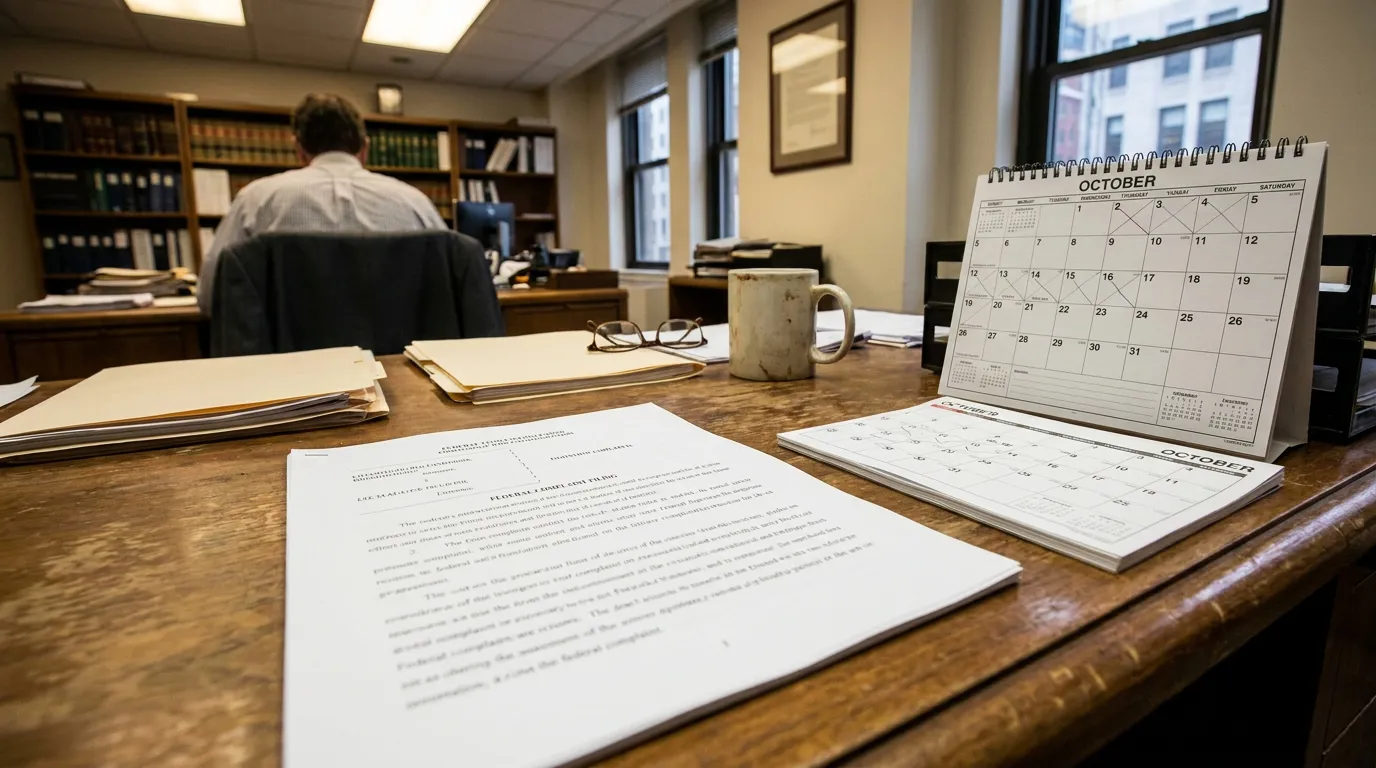
- Tracking day 210 from the filing date of the OSHA complaint
- Preserving discipline notices, injury reports, texts, and supervisor communications early
- Documenting the timeline of when you reported and when discipline followed
- Avoiding unexplained gaps in activity that a railroad could characterize as waiver
💡 Pro Tip: Keep your own copy of every document you submit to OSHA. Rail workers who rely solely on the agency file sometimes struggle to reconstruct a clean chronology later.
Choosing Between the Administrative Track and FRSA Federal Court
There is no universally correct answer, and the choice is strategic rather than automatic. Some workers benefit from staying with an ALJ who knows the record; others gain from a jury and broader civil discovery. The choice is generally one-way, because once the district court action is filed the administrative case ends. Case-law summaries in the Department of Labor’s FRSA whistleblower case digest illustrate how differently these disputes can develop.
Retaliation claims and injury claims are legally distinct. An FRSA whistleblower case addresses retaliation for protected reporting, while a negligence claim for the injury itself generally proceeds under the Federal Employers’ Liability Act, which carries its own three-year limitations period. Many rail workers in Illinois end up with both, and coordinating them requires care from an experienced Illinois railroad whistleblower attorney who understands how the two tracks interact.
Frequently Asked Questions
1. Does the 210-day clock start when I am disciplined or when I file with OSHA?
The 210-day period runs from the filing of the OSHA complaint, not from the retaliatory act. The separate 180-day deadline is measured from the alleged violation.
2. Can the railroad stop my case from moving to federal court?
A carrier may raise defenses such as bad faith delay, waiver, or laches. Courts treat these as fact-intensive, and results vary.
3. Will filing in district court pause an existing DOL order?
Generally no. Under the statute, commencing the action does not operate as a stay of the order unless the court specifically orders one.
4. Is there a minimum dollar value required to file?
No. The district court has jurisdiction over a kick-out action without regard to the amount in controversy, and a jury trial may be requested.
5. Do I need a lawyer to use the kick-out provision?
You are not required to have one, though the procedural rules are unforgiving. Reviewing further rail worker legal guidance can help you understand the process before deciding.
Protecting Your Rights Under the Federal Railroad Safety Act
The 210-day kick-out rule gives railroad employees a meaningful escape from indefinite OSHA complaint delay, converting a stalled administrative matter into an original federal action with de novo review and a possible jury. But the 49 USC 20109 procedure is layered: a 180-day filing deadline at the front end, a 210-day threshold in the middle, and equitable defenses like waiver and laches that can close the door. Every outcome depends on the specific facts, the record built at each stage, and the court hearing the case.
If your railroad retaliation claim in Illinois has stalled at OSHA, do not assume waiting is harmless. Trapp & Geller is trusted by rail workers across Illinois who need clear answers about deadlines and forum choices. Call (312) 368-1444 or schedule a consultation to have your timeline reviewed while your options are still open.